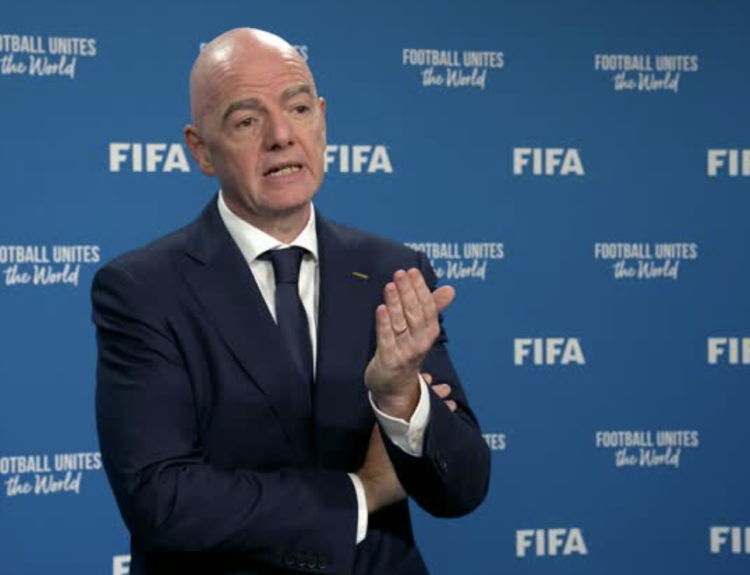
October 21 – UEFA has raised electoral concerns over the role of FIFA official Bruno Chiomento.
In the letter UEFA sent to FIFA general secretary, Mattias Grafström earlier this week, the European governing body questioned the independence of Chiomento as chair of the FIFA electoral committee.
UEFA wrote: “We understand that Mr Chiomento has known the FIFA President for approximately 20 years and is regularly invited to FIFA events and competitions at FIFA’s expense. We further understand that he attended the entire 2026 World Cup as an accredited individual, with his expenses covered by FIFA for more than five weeks. Could FIFA confirm these circumstances and explain how any potential conflicts of interest have been assessed and addressed? In view of the importance of ensuring the independence and perceived impartiality of the electoral process, would FIFA consider Mr Chiomento’s recusal and replacement by his deputy for the duration of the presidential election?”
Chiomento chairs FIFA’s Governance, Audit and Compliance Committee (GACC), one of FIFA’s four independent bodies. He also chairs the review committee and the compensation sub-committee, which sets the compensation for the president. Both those committees form a part of the GACC. As chairperson of the GACC, Chiomento receives CHF250,000 in compensation.
However, his independence has come under increasing scrutiny following his attendance at FIFA events. Chiomento also attended the World Cup draw in Washington D.C. last December and the Olympic football tournament in Paris. At the time, he declined to comment when asked if FIFA covered his expenses.
UEFA’s concerns form part of broader scrutiny of FIFA’s electoral integrity and the independence of FIFA’s judicial bodies. Next year, FIFA will stage presidential elections at its annual Congress in Rabat, Morocco where Gianni Infantino will seek re-election notwithstanding that he prompted FIFA’s greatest crisis since FIFAGate in 2015 by trying to sell off the commercial rights to the World Cup.
The European governing body also flagged the role of secretary general Grafstrom and FIFA’s administration after Grafstrom backed Infantino following a crisis meeting in Rabat.
UEFA asked: “How can such an explicit declaration of support during the official electoral period be reconciled with the administration’s duty of neutrality, including the obligations imposed on FIFA staff under the applicable Code of Conduct?”
In the letter UEFA took aim at the FIFA ethics committee, writing that “we understand that the Chair of the Adjudicatory Chamber, Ms Rojas, has publicly acknowledged personal friendships with the former President of the Colombian Football Association, Mr (Luis) Bedoya, and its current President, Mr Ramon Jesurun. In light of the Colombian Football Association’s support for the FIFA President, could FIFA explain how any potential concerns regarding her independence and impartiality have been assessed, and whether she would recuse herself from proceedings involving the FIFA President where appropriate?”
The investigatory chamber of the ethics committee is chaired by Rwanda’s Martin Ngoga, a close ally of Paul Kagame. During his reign, Infantino has maintained strong ties with Rwanda’s autocratic head of state.
See: UEFA questions highlight Infantino’s ‘weaponised’ FIFA judiciary and protection of key African allies
Contact the writer of this story at [email protected]
PakarPBN
A Private Blog Network (PBN) is a collection of websites that are controlled by a single individual or organization and used primarily to build backlinks to a “money site” in order to influence its ranking in search engines such as Google. The core idea behind a PBN is based on the importance of backlinks in Google’s ranking algorithm. Since Google views backlinks as signals of authority and trust, some website owners attempt to artificially create these signals through a controlled network of sites.
In a typical PBN setup, the owner acquires expired or aged domains that already have existing authority, backlinks, and history. These domains are rebuilt with new content and hosted separately, often using different IP addresses, hosting providers, themes, and ownership details to make them appear unrelated. Within the content published on these sites, links are strategically placed that point to the main website the owner wants to rank higher. By doing this, the owner attempts to pass link equity (also known as “link juice”) from the PBN sites to the target website.
The purpose of a PBN is to give the impression that the target website is naturally earning links from multiple independent sources. If done effectively, this can temporarily improve keyword rankings, increase organic visibility, and drive more traffic from search results.